




TCT Asia 2026 Highlights Review
From March 17–19, 2026, the TCT Asia Exhibition concluded successfully at the National Exhibition and Convention Center (Shanghai).
As a trusted platform for additive manufacturing and industrial 3D printing, TCT Asia has grown into the largest and most influential event in the Asia-Pacific region. The exhibition showcases cutting-edge technologies, multi-material innovations, and practical industrial solutions shaping the future of manufacturing.
Industry Signal from TCT Asia 2026 confirmed one thing:
Additive manufacturing is entering the scale phase, especially 3D-printed footwear, which is moving beyond prototyping and entering early-stage commercialization.
Industry Signal from TCT Asia 2026: 3D Printed Footwear Moves from Innovation to Mass Production
Market Highlights from Leading Brands:
Wanhua Chemical × Li-Ning – Wudao Future: TPU + supercritical CO₂ foaming → Lightweight, high rebound → Strong demand → temporary stock shortages
PEAK – 3D NextFit: Fully 3D printed TPU shoes → Multi-hardness zones (85A / 90A)
Key Takeaway: The competition has shifted: Can you print TPU? Can you scale TPU printing reliably?
(Note: Although Si-TPV was not showcased at TCT Asia 2026, the event validates industry trends that highlight the need for additive manufacturing footwear, TPU filament in FDM, Flexible, matte, or soft-touch material innovations like Si-TPV in scalable 3D printing.)
Why TPU Filament Fails in Real Production — Not at Exhibitions?
Many 3D printing innovations look impressive in short-term demonstrations, but long-run production exposes critical material limitations:
Common TPU Filament Challenges Observed in Industry:
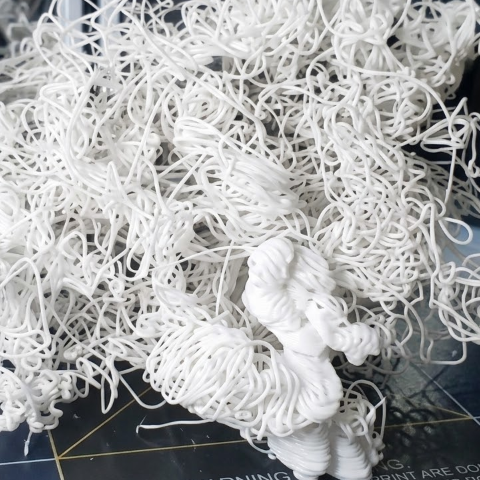
- Stringing in Long Production Runs → Surface defects, increased post-processing
- Nozzle / Die Build-Up → Residue accumulation, frequent downtime
- Unstable Extrusion → Diameter inconsistency, yield loss
- Glossy Surface Limitation → Cannot meet premium footwear aesthetics
- Limited Softness (High Shore A) → Cannot achieve soft-touch comfort
The Real Upgrade Path: From Equipment Tuning to Material Engineering
At this stage, machine optimization alone is insufficient. Industry leaders are shifting toward material-level innovation to solve high-frequency TPU filament problems.
Material Innovation: The Role of Si-TPV in TPU Filament Optimization
While not showcased at TCT Asia 2026, emerging material technologies such as Si-TPV (dynamic vulcanizate thermoplastic silicone-based elastomer) directly address the limitations exposed by current TPU systems.
Si-TPV is a TPU modification technology engineered for:
Stable melt flow
Reduced friction
Surface quality control
Soft-touch enhancement
How Si-TPV Modifiers Solve TPU Filament Bottlenecks:
✔ Improve Extrusion Stability → Consistent melt flow, reduced pressure fluctuation
✔ Reduce Stringing → Cleaner print paths, higher yield
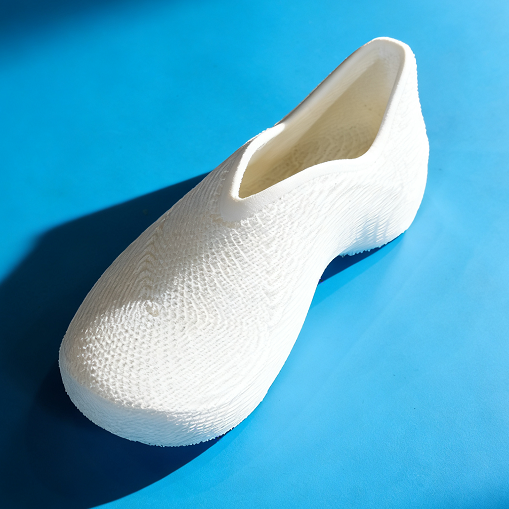
✔ Enable Matte TPU Surfaces → No secondary coating needed, premium appearance
✔ Achieve Low Shore A Softness → Silicone-like touch, enhanced footwear comfort
What does this mean for TPU Manufacturers? If you are developing TPU materials for 3D printed footwear, Flexible FDM filament, or Matte or soft-touch applications.
The opportunity is clear: Shift from process optimization → material innovation
FAQ: TPU Filament Stability & 3D Printed Footwear
1. How to reduce stringing in TPU filament for 3D printing?
Stringing can be reduced by improving material flow behavior and internal lubrication, not just adjusting printing parameters. Advanced material solutions, such as Si-TPV modified TPU, help achieve cleaner extrusion and more stable print paths.
2. What causes unstable extrusion in TPU filament?
Unstable extrusion is typically caused by: Inconsistent melt viscosity, high friction at the die/nozzle wall, and poor material flow control. This results in diameter fluctuation, surface defects, and yield loss during long production runs.
3. How to achieve a matte surface in 3D printed TPU footwear?
Traditional TPU naturally produces a glossy finish. To achieve a matte TPU surface, manufacturers need material-level modification, such as Si-TPV, which enables intrinsic matte effects without secondary coating.
4. What is the key challenge in scaling 3D printed footwear production?
The biggest challenge is maintaining consistent material behavior during continuous production, not just printability. Stability in extrusion, surface quality, and softness are critical for scaling.
5. What is Si-TPV, and how does it improve TPU filament performance?
Si-TPV (silicone-based thermoplastic vulcanizate elastomer) can be directly used as a soft-touch 3D printing material, and it can be used as a Matte TPU monofilament modifier. This TPU modification technology enhances: Melt flow stability, Surface quality (matte finish), Soft-touch performance, Reduction of stringing and build-up. It enables TPU materials to meet industrial-scale 3D printing requirements.
6. Is Si-TPV suitable for FDM 3D printing applications?
Yes. Si-TPV elastomer modified TPU is particularly suitable for FDM 3D printing, especially in applications requiring: Flexible materials, Soft-touch surfaces, High surface quality, and scalable production stability.
Looking to reduce stringing and build-up? Improve extrusion stability? Seeking a solution for TPU extrusion instability?
Here is a way to upgrade your TPU formulation optimization material strategy and reduce surface defects.
Contact: amy.wang@silike.cn or visit www.si-tpv.com to learn about Si-TPV. As a high-performance TPU modifier, how can it help TPU material suppliers achieve matte and soft-touch finishes in TPU 3D printing?
Related News
-

Emerging Haptic Technologies Necessar...
-
What are the existing and emerging al...
-

Innovations made of EVA foam: The Tec...
-

Suppliers of Sustainable and Eco-Frie...
-

How to make apparel and accessories a...
-

A Shower of Solutions: Rethinking Cha...
-

Eco-Comfort: Si-TPV’s Soft Solu...
-

Empowering Electric Vehicles: Innovat...
-
From TPE to Si-TPV: An Attractive in ...
-
Future-Forward Comfort: Exploring Inn...
-

Hand Grip Solutions: Explore differen...
-
How to reduce the hardness and enhanc...
-
3C Electronic Consumer Product Manufa...
-

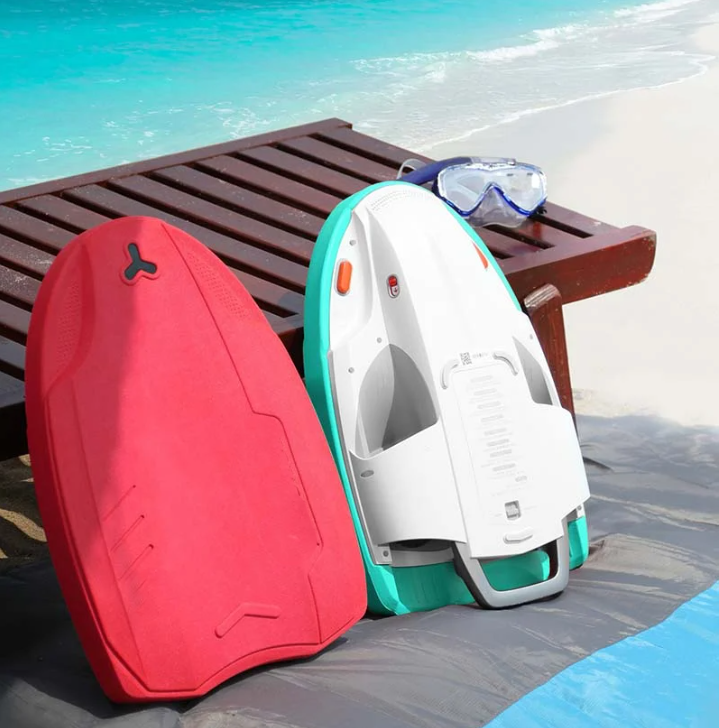
Challenges and Solutions in Swimming ...
-
Elevating EVA Foam Material: Introduc...
-
Innovating the EVA Foam Market: Trend...
-

Material of Skin-friendly and Elastic...
-

Smart bracelet material selection rev...
-
Si-TPV Soft Elastic Material: The Ide...
-
Si-TPV Heat Transfer Films: Pioneerin...
-
Solutions for Common Overmolding Chal...
-
Say Goodbye to EV Charger Failures: E...
-

Tired of heavy massagers straining yo...
-

The Future of Laminated Fabric: Innov...
-

Solve EVA Foam Challenges
-

Celebrating the 20th anniversary of T...
-

Elevating EVA Foam Performance with S...
-

Ways to enhancing Scratch and Mar Res...
-

New Material Direction for Electric T...
-

Si-TPV Heat Transfer Film: play aroun...
-

Si-TPV Makes Soft Skin-Friendly Comfo...
-

Si-TPV Soft EVA Foam Modifier: Enhanc...
-

Si-TPV Thermoplastic Elastomers Help ...
-
3.jpg)
Si-TPV Thermoplastic Elastomers: Ritu...
-

Si-TPV Thermoplastic Silicone Elastom...
-

Soft Material Solutions for Handheld ...
-

Soft Touch Appeal, Performance Materi...
-

Solving Challenges for EV Charging: W...
-

Sustainable fashion bag solution usin...
-

What are the latest innovations in ve...
-

Silicone Vegan leather, make home sof...
-

The Ideal Pet Collar: Choosing the Ri...
-

The Rise of Sustainable Fashion: Si-T...
-

Advanced 3D Printing Materials for Fi...
-

How TPU Filament Stability Limits Sca...

